


.png)
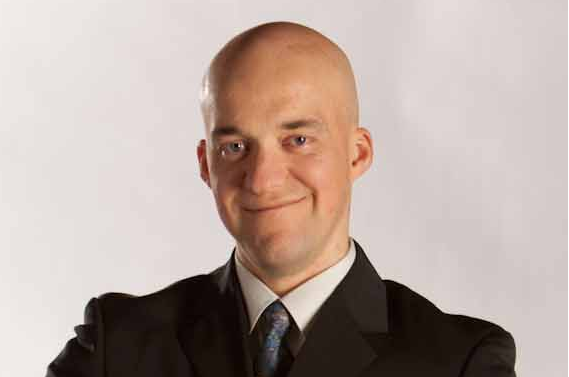 Brave New Climate is a blog on climate science and low-carbon energy options, run by scientist and university professor, Dr. Barry W. Brook.
Barry is a leading environmental researcher, modeller, data analyst and author, in the fields of ecology, conservation biology, palaeoenvironmental reconstruction, and sustainable energy systems. He is employed at the University of Adelaide’s Environment Institute, where he holds the Sir Hubert Wilkins Chair of Climate Change in the School of Earth and Environmental Sciences and is also a member of the Center for Energy Technology. He has published three books, over 200 refereed scientific papers, is a highly cited researcher, and regularly writes popular articles for the media and public policy documents.
He has received a number of distinguished awards for his research excellence and public outreach, including the Australian Academy of Science Fenner Medal and the 2010 Community Science Educator of the Year. His research interests are climate change impacts, species extinctions, simulation and statistical modelling, energy systems analysis (with a focus on modelling future nuclear and large-scale renewable energy scenarios), and synergistic human impacts on the biosphere.
Author of a popular book on sustainable nuclear energy, Barry is an International Award Committee member for the Global Energy Prize, a 2012 Senior Fellow at the Breakthrough Institute, and considers himself a ‘Promethean environmentalist’. Prometheans are realists who shun romantic notions that modern governments might guide society back to an era when people lived simpler lives, or that a vastly less consumption-oriented world is a possibility. The goal is simple to understand but difficult to implement — developing real-world, high-capacity and cost-effective solutions to environmental challenges – such as nuclear power and other techno-fixes – which history has shown to be reliable and timely.
For more on his climate science qualifications and research interests, read this post.
Effective communication of the science of climate change is fundamental to providing policy makers with the type of evidence required to institute meaningful mitigation policy and to understand available adaptation options. It is this imperative that has led Barry to take an active leadership role in the communication of the science of global change to government, industry and the community (directly, via public lectures and workshops and advisory committees, and indirectly via the media – including television, radio, the print media and popular science articles).
For further details, see his University website: http://www.adelaide.edu.au/directory/barry.brook
A short (2 min, 35 sec) animated video explaining the themes of the BNC blog:
I welcome comments, posts, suggestions and informed debate, from a wide range of perspectives. For the BNC comments policy, read this.
Disclaimer — The views expressed on this website are my own or my contributors’ and do not necessarily represent those of the University of Adelaide or any other organisation.


Methane emissions from coal deposits.see http://www.mining-technology.com/features/feature1621/
I have not seen any quantitive analysis but I suspect that there is a huge methane resource available in coal beds and abandoned mines. As this leaks into the atmosphere eventually would not a global methane drainage and combustion to generate electricity program be beneficial?
Combined cycle gas generation plants can have thermal efficiencies that approach 70%.
Surely it would be best to oxidise CH4 to Co2?
Regards,
Dale Butler
Absolutely – that is why flaring of oil wells is preferable to venting the methane directly into the atmosphere.
Capturing methane from point sources, such as landfills and coal mines (not open cut – impossible) – is clearly a high priority in the very short term. As is fixing leaky pipelines. In “The Revenge of Gaia”, Lovelock provides some startling figures on just how much of an impact this leaked methane has.
[…] warming and biodiversity extinction 14 08 2008 My colleague Barry Brook recently posted a discussion on the impacts of climate change on biodiversity extinction rates and […]
Dr Brook,
FOund your blog via RealClimate site. Reading now.
Wonder if you have heard or read about or seen images of my polar cities project, aka Lovelock Retreats? Some will be located in Tasmina, New Zealand and Patagonia. DO you think Australian newspapers would be interested in this futuristic news?
See here:
http://pcillu101.blogspot.com
email me to chat pro and con on polar cities your POV at
danbloom GMAIL
I note that the North pole is encircled by forest (the Taiga or Boreal)
It occurs to me that as the CO2 levels go up and this forest creeps further towards the arctic circle it will transpire water vapour into the atmosphere where previously the air has been exceedingly dry due to the low temperatures, in any event water vapour will simply diffuse into the space as the temperature goes up. Now, as the deniers are continually telling us, water vapour is a major GG. My question is does this effect exist and is it a major positive feedback?
regards,
Dale Butler
Good question Dale. Short answer is that polar forests warm the planet as they reduce albedo (there may be a water vapour effect but it is not the main issue). Tropical forests cool the planet due to their carbon stores and cloud generating potential.
Some papers:
http://www.pnas.org/content/104/16/6550.abstract
http://www.sciencemag.org/cgi/content/abstract/280/5371/1916
and a news article:
http://news.mongabay.com/2007/0409-forests.html
Danny, thanks for the link – absolutely fascinating, albeit somewhat dystopian stuff!
Dear Barry,
I have news for you about the London conference that appears in a comment on your blog, but don’t know how to contact you directly. Please check my latest blog post and send me an email if you want to learn more.
Sincerely,
inel
[…] review my colleagues, Barry Brook and Navjot Sodhi, and I have just published in Trends in Ecology and Evolution demonstrates how […]
Thanks Inel, that has now been spamified.
G’day Barry,
I’d be really interested in your opinion of this piece of climate porn the Nine Network currently has in the pipeline.
The ridiculously telescoped timeline is one obvious howler, but that aside, how realistic a scenario does this look to you?
Most importantly, do you think this sort of thing is helpful?
I think the timelines are unrealistically compressed, making it impossible to judge whether authorities will, in reality, have the foresight to avoid this sort of problem. Perhaps forwarned is forearmed, or perhaps it encourages the boy who cried wolf – that’s a complex question.
But it does underscore a grave issue – the realisation that, worldwide, failed states will become an economic and humanitarian reality as a result of water shortages – probably within the next few decades. Pakistan is right up there as a candidate thanks to its high dependence on summer Himalayan glacial melt via rivers that first flow through India…
I presume from the rapidity of your response that you were already familiar with it. The producers didn’t engage you as a consultant, did they?
No – but you’re right, I did know about it – I was interviewed by someone doing a media review on it.
[…] Prof. Barry Brook @ bravenewclimate.com: So the key to unlock this ‘diabolical problem’ is to focus on the energy technologies, as urgently as humanly possible. Design a capital works programme, lead by a forward-looking government, to start laying out solar thermal, wave, wind, geothermal and microalgal biodiesel liquid fuels on a massive scale. Define a REAL 2020 goal, such as to have 80% of Australia’s power met by renewables by 2020, instead of some abstract target that is reliant on an unenforceable multilateral global agreement which will never eventuate. […]
[…] like to introduce a (relatively) new textbook that my colleagues, Navjot Sodhi and Barry Brook, and I wrote and published last year with Blackwell (now Wiley-Blackwell) Scientific Publishing – […]
Hi, I’d like to speak with you about your blog. Please contact me at your earliest convenience. Thanks! -Dave
[…] to provide further elaboration of the science reported in my attached paper (Hansen et al., 2008): Professor Barry Brook, Professor of climate change, University of Adelaide Dr Andrew Glikson, Australian National […]
[…] takes a page (quite literally) out of our book Tropical Conservation Biology (Sodhi, Brook & Bradshaw) – therein we produced a series of ‘Spotlights’ describing the […]
CARN THE HAWKS!
I see your team had a big Grand Final win Barry – a good omen maybe;-) Let’s hope you can convince people of the desperate state of our planet otherwise it will be game over for us all. Keep up your good work in communicating the science of AGW to us lay people.
[…] series on ConservationBytes.com takes a page out of our book Tropical Conservation Biology (Sodhi, Brook & Bradshaw) – therein we produced a series of ‘Spotlights’ describing the […]
[…] series on ConservationBytes.com takes a page out of our book Tropical Conservation Biology (Sodhi, Brook & Bradshaw) – therein we produced a series of ‘Spotlights’ describing the […]
Hi i saw your presentation at the UniSA on Friday night, and it it definitely made an impression. Do you have a link for the animation of global average temperatures over the last 200 years ? I want to circulate it.
Regards
Richard Arnold
Richard, you can download that animation here.
[…] series on ConservationBytes.com takes a page out of our book Tropical Conservation Biology (Sodhi, Brook & Bradshaw) – therein we produced a series of ‘Spotlights’ describing the […]
Dear Barry
Leading NASA climate scientist James Hansen has publicly advised Kevin Rudd on the urgency of phasing out coal.
http://www.aussmc.org.au/documents/Hansen2008LetterToKevinRudd_000.pdf
Dr Hansen has also graphically stated:
“If we cannot stop the building of more coal-fired power plants, those coal trains will be death trains – no less gruesome than if they were boxcars headed to crematoria, loaded with uncountable irreplaceable species.” (Climate, Coal and Crematoria)
On these grounds, is it reasonable to assert that the activities of the coal industry now pose as much as a danger, if not more, than the danger involved in having nuclear reactors?
We Australians have been historically anti-nuclear. What reason is there, given the increasing urgency of responding to climate change, of remaining pro-coal?
(I am asking these questions amidst a discussion with my Federal MP about the continuation of the coal industy…)
cheers, Shakti
Shakti @25: Yes, I am named on Jim Hansen’s letter (look at the list at the end of the letter).
Nuclear reactors pose the risk of meltdown and a significant immediate regional impact from radiation leakage (e.g. Chernobyl, which could have been much worse than it was if a bunch of brave souls hadn’t sacrificed their lives to shut down the reactor). But climate change threatens a global crisis that is chronic and exacerbating as every extra tonne of coal is burned. So I would definitely classify coal as the much greater danger.
Nuclear via 4th generation reactors (no meltdown, efficient use of feedstock), or fusion (if it ever arrives) offer wonderful opportunities. But 2nd Gen for Aust is too little, too late, so why bother.
Barry, could you consider putting NOAA ESRL in your resources section? I find it extremely useful, both for myself, and in illustrating to others the Mauna Loa record, and how dramatic the rise in concentrations has been in recent years.
[…] series on ConservationBytes.com takes a page out of our book Tropical Conservation Biology (Sodhi, Brook & Bradshaw) – therein we produced a series of ‘Spotlights’ describing the […]
[…] series on ConservationBytes.com takes a page out of our book Tropical Conservation Biology (Sodhi, Brook & Bradshaw) – therein we produced a series of ‘Spotlights’ describing the […]
21-11-2008: I’ve been away from internet for the past 5 days (at a workshop in the Daintree Rainforest) – hence the lack of updates to the blog and non-response to comments. Now I’m back, and I have lots of new stuff for the coming few weeks.
[…] series on ConservationBytes.com takes a page out of our book Tropical Conservation Biology (Sodhi, Brook & Bradshaw) – therein we produced a series of ‘Spotlights’ describing the […]
Barry @26: I’m surprised at your dismissal of the value of building new nuclear reactors UNLESS they are Gen IV technology.
I’m from Maryland in the USA, and we have the opportunity soon to approve construction of an additional 1,600 MW Gen III reactor at the existing Calvert Cliffs nuclear power plant. This one additional reactor would be capable of reducing baseload coal use that is equivalent to what could be hauled in a 650-mile-long “coal train” – each and every year it operates.
Groups like the Sierra Club are opposed to the permitting of this new reactor and argue that renewables instead could provide the same capability of this one reactor in generating power during summertime (our grid region’s period of highest demand). However, the most cost-effective renewable energy is now provided by wind turbines, but it would necessitate the construction of 10,000 MW of industrial wind turbines to yield the same summertime output (MWh) of this one 1,600 nuke reactor (due to 15% summertime capacity factor of wind turbines installed in region). Furthermore, construction of 5,000 2-MW wind turbines would primarily occur on predominantly forested ridgetops along the biodiversity-rich Appalachian Mountain chain – and likely would result in the clearcutting of 7,000+ hectares of forest along 750+ miles of ridgetop (see recent photographic evidence via: http://www.windaction.org/documents/18575 ).
The forest fragmentation impact of this amount of wind energy development would result in the loss of perhaps 35,000 hectares of ecologically-significant “forest interior habitat” (given that most forested ridgetops represent core areas of existing forest interior habitat) – see: http://www.kutztown.edu/acad/geography/wildlife&windconf/Speaker_Presentations/Boone_GIS.pdf .
Clearly, it seems to me that a Gen III nuke reactor is far-better than clearing and roading hundreds of miles of forested ridge in order to site thousands of industrial wind turbines.
I’m also a bit puzzled as how you can rationalize that “meltdowns” are a significant risk of nuclear power given that the only other meltdown of a power plant reactor besides Chernobyl occurred at 3-Mile Island power plant in Pennsylvania in the USA, and it released no significant amounts of radiation. In addition, no human health concerns were ever documented to be the result of radiation leak at 3-Mile Island, and no traces of radiation were found in surrounding waterways – see: http://www.mdconservationcouncil.org/HealthEffects.html . The reactor design of the 3-Mile Island power plant is similar to what is used at nearly all nuke power plants elsewhere in the world.
However, I’m really perplexed by your inference that Chernobyl is representative of the risk posed by nuclear power plants now in existence. Surely you realize that this Russian design is not remotely comparable to the reactor designs in use throughout the world? Thus, it is not credible to cite Chernobyl as what realistically could occur due to meltdown scenario. You seem to strongly cling to long-held biases against nuclear power…
Given that Gen IV reactors can make total use of spent Gen III and Gen II fuel rods, I don’t see the harm or problem in supporting these currently available reactor technologies.
FYI, for many years now about half of all the fuel rods in the 100+ nuclear power plants are derived from reprocessed Soviet nuclear warheads (aka Megatons to MegaWatts Program). Thus, decommissioned Soviet warheads are responsible for supplying 10% of total US electricity demand (i.e., 50% of the 20% of US electricity generated by nuclear power plants).
One ‘b’ in Rabett (blogroll, sidebar).
> Given that Gen IV reactors can make total use of
> spent Gen III and Gen II fuel rods
Need: proof of concept; numbers, how many could consume how many currently stored (contents changing with decay, casing corroding slowly) and future fuel rods? over what time period, with what cost/risk?
Building more old type reactors based on promises is how we got where we are now, going in the direction we’re headed now.
“She swallowed the spider to catch the fly,
but I don’t know why she swallowed that fly …”
[…] involved in the institute will be the university’s climate change expert Barry Brook and conservationist David […]
Whose fussy?
[…] series on ConservationBytes.com takes a page out of our book Tropical Conservation Biology (Sodhi, Brook & Bradshaw) – therein we produced a series of ‘Spotlights’ describing the […]
[…] article is hosted on Brave New Climate, the blog of Australian Barry Brook, Director of the Research Institute for Climate Change and Sustainability at the University of […]
[…] series on ConservationBytes.com takes a page out of our book Tropical Conservation Biology (Sodhi, Brook & Bradshaw) – therein we produced a series of ‘Spotlights’ describing the […]
[…] series on ConservationBytes.com takes a page out of our book Tropical Conservation Biology (Sodhi, Brook & Bradshaw) – therein we produced a series of ‘Spotlights’ describing the […]
Eli Rabett (#35 15 December 2008 at 14.30)
“Whose fussy?”
Don’t you mean “Who’s fussy?”
Sorry. Couldn’t resist.
Read your “Unleashed article / ABC” today with interest.
Do you think raising expectation of a nuclear ( partial ) solution is good idea? Whilst the promise of new technology ( in the form of the Intergral Fast Reactor ) is appealing, it is ,as I understand it, only experimental at this stage. There may be unforeseen problems ( as there have with nearly every other new nuclear technology so far, use of liquid sodium, fuel processing etc ) and it will take at least one, probably two decades, before we can be confident of a commercial future for it.
Climate change is a much more urgent problem, my concern is, that by investing in this ( as with clean coal ) we are diverting resources from renewable energy and wasting precious time.
At some stage though George governments ARE going to have to make decisions about technologies and investments – they may at least make that research and investment in technologies that can tick all the boxes.
Immediate, ramp up renewables, ramp up efficiency, ramp up R&D (all massaged in the
15-20 years – broadscale introduction of base load power technology – whichever of clean coal, nuclear, renewables storage has come up trumps.
[…] colleague, Barry Brook, invented this excellent term to describe those people who blindly support anything […]
[…] Guide to Biodiversity Loss 30 01 2009 I’m taking Barry Brook’s great idea on the Cartoon Guide to Global Warming Denial and applying it to biodiversity […]
[…] Turmoil II 8 03 2009 In August last year I covered a paper my colleagues (Navjot Sodhi and Barry Brook) and I had in press in Frontiers in Ecology and the Environment entitled Tropical turmoil – a […]
[…] August last year I covered a paper my colleagues (Navjot Sodhi and Barry Brook) and I had in press in Frontiers in Ecology and the Environment entitled Tropical turmoil – a […]
Hi Barry,
I’m the publication coordinator for the Just English magazine – a magazine which caters to teenagers and young adults with emphasis on improving English.
I was wondering if I could feature your two articles in our magazine: Six Degrees of Separation and Global Warming Strains at Species Interactions.
Please let me know.
Thanks,
Leanne
No problem Leanne, feel free to go ahead and use them. It’s all public domain once posted on the blog, provided an acknowledgement via link-back is provided.
[…] thanks to Lochran Traill and Barry Brook for co-developing these ideas with me) Possibly related posts: (automatically generated)Wasting […]
[…] good friend and colleague, Barry Brook, is our twelfth Conservation […]
Barry
Have you considered publishing your review of Plimer’s H&E in the other capital city daily newspapers?
It is really important to reach the general population to counter his populist non-science, because it will appeal to the “faithful”, so-called climate sceptics.
Could I do it on your behalf?
Regards
Shirley
Thanks Shirley, but I doubt they’d publish anything sufficiently detailed to be convincing/useful. There are at least two counter Op Eds in the works that I know of, but it is unclear if either of them will get published.
Hello Dr. Brook,
Great blog! I’ve really enjoyed reading it and have added it to the blogroll at “Energy from Thorium”. Keep up the good work!
Hi Bary,
I have a question regarding IFRs.
I think (please correct me if I am wrong) that the SFR that is under development in the GIF program is more or less the same concept that Tom Blees develops in his book “Prescription for the Planet”. However, their is one key difference: if you look at the GIF website, they say there are still “Improvements in passive safety required” while Tom Blees clearly says that the passive safetly mechanisms of the IFR where more than proven in the EBR II reactor (page 326 of the book). Could you please clarify this point?
Thanks!
Juan (Madrid)
I wanted to let you know about a recent article we posted about nuclear power; you can check it out at: http://ecohearth.com/eco-pedia/energy-and-fuels/391-meltdown-or-mother-lode-the-new-truth-about-nuclear-power.html
Nuclear power was talked about quite a bit in the 2008 presidential campaign, then got moved to the back burner once it was no longer viable as a wedge issue. I must admit that I still don’t quite know where I stand in the debate … Of course I know the discussion has gotten a lot more complex than ‘No Nukes!’; I also know that 24,000 people die a year in the US in coal-related deaths (compared to 56 deaths resulting from Chernobyl). But as a environmentalist, I still can’t get out of my head the argument for energy efficiency and renewable sources of energy.
I’m not trying to be simplistic, as I said, I know that the issue is extremely complex and that our energy needs are probably bigger than what we can get from wind and solar power but … ach, maybe it’s growing up in the shadow of Chernobyl and 3 Mile Island, I can’t get myself 100% behind a technology that no matter how safely it’s executed, does have the power to do massive damage.
Thanks for the link Diane, that’s a really useful and well-balanced article by Kotler.
Have you read Craven’s book? It has a lot of detail about safety that I think will address your lingering concerns.
[…] in point: my good friend and colleague, Professor Barry Brook, started his blog BraveNewClimate.com a little over a month (August 2008) after I managed to get […]
The SFR proposed by the Gen IV initiative is a generic design, which could include the IFR or variants being developed in other countries. The IFR included on-site pyroprocessing and metal fuels, whereas other SFR designs included oxide fuel and central reprocessing. Metal fuels are one feature of IFRs that brings large passive safety benefits.
Professor Brook, as a lay people who is agnostic about the significance of human-made climate change I have been impressed by Dr. John Nicol’s paper “Climate Change (a fundamental analysis of the greenhouse effect)” see http://www.ruralsoft.com.au/ClimateChange.doc). This analysis strengthens my agnosticism, but in an effort to remain open-minded I searched for any scientific paper that showed in as much detail how Dr. Nicol’s analysis might be flawed. I have been unable to find such a paper. Dr. Nicol tells me that he has invited peer review but has received nothing but supporting comments. It seems to me that it is important for those scientists like yourself who support the argument of human-made cclimate change through our use of fossil fuels carry out a thorough review of Dr. Nicol’s analysis and show precisely where he has erred (if he has done so).
Are you able or willing to help on this?
Regards, Pete Ridley, Human-made Global Warming Agnostic
[…] up a year-long Hrdy Fellowship there. We’ll be joined by my close friend and colleague, Barry Brook, and Resit Akçakaya of RAMAS fame. We’ll be working on a few ideas regarding extinction […]
Dear Prof. Brook,
I am a farmer in Western Victoria. Various groups in local town, frustratingly, have organized such speakers as, Kininmoth, Plimer recently, and fortunately Ian Watterson on modelling. David Archibald, from the Lavoisier Society is next!! I cannot find a review of his latest book, do you know of one? Failing that, what are the questions I should be asking about Solar 24? Failing that, are you on the speaking circuit? Doug Craig
Hi Barry,
Didn’t see a news tip link but thought you might be interested in this feature about graphite research at Idaho National Laboratory that will aid Gen IV reactors.
http://www.inl.gov/graphite
Thanks,
Tom
Barry, Will you be reviewing this?
Climatologist Dr Garth Paltridge has finally had enough of the hysteria, hype and witchhunting that’s fed the great global warming scare. Out today is his new book, The Climate Caper:
(Patridge) discusses how and why climate scientists have vastly overstated the case for disastrous global warming.
Among other things he explains why forecasts of a much dryer Australia in the future – forecasts which were the basis of the Garnaut economic recommendations which led in turn to the Emissions Trading Scheme now before parliament – are probably nonsense….
He says of climate change research: “The whole business has hardened over the last couple of decades into a semi-religious crusade in which climate scientists have developed an arrogance about their aims and activity which brooks no argument either with their interpretation of the science or with the way the science is used.”…
Much of the book is devoted to examples and discussion of how ‘the system’ keeps scientific scepticism about forecasts of climatic doom from public view. As for the rest of us, the attitude of a climate scientist can be coloured by politically correct ideas, by a need to be associated with a ‘cause’, by loyalty to colleagues and by the rise of excessive research competition. These are all powerful forces which amplify a real fear within the research community that an expression of scepticism about the current wisdom on global warming can be disastrous to one’s career.
(No link to the Connor Court press release.)
Paltridge is a critic not easily dismissed by our leading promoters of apocalyptic warming, such as mammal expert Tim Flannery, singer Peter Garrett, general practitioner Bob Brown, economist Ross Garnaut, ex diplomat Kevin Rudd and former politican Al Gore, none of whom have any of his expertise in climate science:
Dr Paltridge was a Chief Research Scientist with CSIRO and is a Fellow of the Academy of Science. His is a specialist in atmospheric physics and climatology. He took part in the establishment of the World Climate Program in the mid-1970’s, and was with the US National Climate Office during 1989 at the time of the emergence of the Intergovernmental Panel on Climate Change. For ten years he was CEO of the Antarctic Cooperative Research Centre studying the role of Antarctica and the Southern Ocean in climate. He is currently an Emeritus Professor at the University of Tasmania.
No
DC – would that be the Garth Paltridge associated with the IPA and the Lavoisier Society/ Thought so!
I agree that this is grossly unhelpful. The media & certain members of the “climate change industry” (for want of a better term) are making matters worse by overstating the dangers of global warming (which are not insignificant IMO). I believe that not only has it generated a “well there’s no point, we’re all doomed anyway” mentality, but it also creates the problem that, when the overstated dangers don’t eventuate, people become skeptical towards the real dangers posed by global warming. I take a more upbeat view. YES there are critical issues relating to global warming, but we can reduce them just through more sensible use of current energy resources, coupled with a reasonable shift towards renewable energy resources (including co-generation & biomass gas).
There is a factor I find no mention of in the AGW argument — the CO2 produced by the natural and human-originated oxidation (rotting) of carboniferous material worldwide. So far I have found no estimate of this number. Could not this number be many times that of intentional fossil fuel burning…? Maybe 1000 times…?
Obviously, the rate of such oxidation of these materials would increase with temperature, possibly as and exponential of earth-temperature increase, as it indeed releases heat in the process at the point the oxidation occurs, accelerating it.
If this were the case, the causal relationship of the AGW argument is REVERSED. The INCREASE in temperature is the cause of the increase in CO2…!
Lucky. This is called the carbon cycle which has been pretty well studied for
decades. Consider a HUGE fountain spewing into a large pool with a pump recycling
the water. Ignoring evaporation, this can run for centuries without overflowing.
Now start running just a small extra hose into the pool from some other
source … now you have a problem and the pool will overflow. Ditto … carbon
from rotting vegetation. It goes up, the vegetation grows and the carbon
comes down … this is the carbon cycle. Its the extra carbon we are adding
that is causing the biggest part of the problem.
The amount of CO2 derived from fossil fuels, as opposed to that from rotting vegetation and other recent ogirigns, can be calculated because of the differing carbon isotopes.
Carbon 14 ( 14 C ) is generated by thermal neutrons interacting with nitrogen nuclei in the upper atmosphere ( 1n + 14N → 14C + 1H ) . 14 C has a half life of 5700 years, decaying back to nitrogen ( N 14 ). As a result, Carbon in fossil fuels is depleted of 14 C ( ie carbon 12 /13 ).
It is not excluded from IPCC or climate science. It is how we know what the relative contribution of anthropogenic CO2 emissions to the atmosphere.
Also, ‘Lucky’, read up on the Keeling curve. Its annual rises are due to, as you say, oxidation (rotting) of carboniferous material worldwide, and its dips occur in the part of the year when plants are growing faster than they are rotting.
The peak-to-trough difference is large compared to what we add in a year, but small compared to what we have cumulatively added.
(How fire can be domesticated)
Hi there,
Do you have any information regarding Professor Don Easterbrook’s research? I believe in the theory of man made climate change myself, but having come across his paper recently I would like to see what the scientific community has to say about it.
Thanks, Cameron Dron.
Hi Barry,
I heard you speak a few months ago and found it really informative. I have since discussed your talk with many of my colleagues and they would also like a chance to attend some of your speaking engagements. Is there anyway of being notified what conferences/seminars you will be present at in the future, specifically ones in Adelaide.
Thanks, Alyssa
Alyssa #72: I’m speaking at 4 events in the next month. Three are by-invitation dinner or business talks, but you may be interested in the Dunstan Dialogues – Power and the people:
http://www.cpsu.org.au/events/15138.html
(Union Hall, Univ Adel, 11 Nov, 5:30pm)
I attended an information night conducted by NSW Ag (DII these days). The first slide in the presentation was Manns Hockey Stick which I beleive has been discredited for many years. The presentation was based on the effects of CC on Ag , namely hotter summers, shorter winters and longer dry periods. Then the ETS was introduced and the contribution farmers would be expected to make to CO2 reduction as well as the possibility of trading in carbon credits. The end result was that most of the seventy farmers present said they would probably stop farming and grow trees instead. It was obvious that they would not be able to pay an ETS tax and compete with cheap imports from non-ETS countries. I am sure that the whiz kids who want the ETS have not considered such a response from farmers and neither have they factored in other possible consequences of such a scheme. It would seem that they believe all will be much the same as with the GST. From what I’ve seen that won’t be the case.
Dear Prof Brook,
It’s funny, I have sceptical tendencies yet in some respects I have come to similar conclusions to you. I am prepared to do precautionary emission cuts if they are done sensibly. Nuclear is currently the only proven solution to this requirement. So I have dropped my previous opposition to it. Our state government wants a clean and green image and frowns on nuclear energy, yet sells uranium to China, and wants to use geothermal which employs natural nuclear processes. It says gas is cheaper than nuclear, but an ETS could markedly narrow that difference, especially if the gas starts to run out. Also I think we should be selling uranium to India for their civilian nuclear program – that alone would be a big contribution to global emission reduction while helping India’s huge population rise out of poverty.
One question: fee and dividend. I’m sorry, I don’t get this. I must be missing something. The fee part is clear enough I think – it just sounds like a flat carbon tax. But what is the dividend? How is it made revenue neutral? And wouldn’t that just be churn anyway? Or is the dividend somehow conditional on some environmental benefit? Could you just drop a quick line to enlighten me?
David, my understanding is that the fee and dividend is revenue neutral for the overall economy. If you personally use less energy than average, you make money, if you use more, it costs you extra. Otherwise, if nothing else changes with the economy-wide energy system, there is no net overall cost (just some wealth transfer among users). For individuals, you might use less by saving energy (e.g. buy more efficient appliances), or a power company might build a nuclear power station and be able to sell the energy without paying the fee, so undercutting the fossil generators.
[…] About […]
Dear Professor Brook, my understanding of systems theory is that in the long-term, all homeostatic systems attempt to maintain homeostasis. Any attempt to model the behaviour of complex systems is always limited by the model assumptions and missing/unforeseen parameters. Any attempt to predict the future in the long term is a 50:50 bet.
I see the US government’s paleoclimatology site says it attributes 50% of warming to human activity, and the other 50% as a natural cycle.
I’d be grateful if you point me in the direction of the evidence base for successful future prediction by scientists.
Are my eyes seeing correctly?
Is that ‘Nuclear Power – Yes Please’ badge for real or some kind of ironic joke?
FWIW – the latest NASA global temperature data 2009 (with pictures just like the Global surface temperature anomaly picture at the top of the page) demonstrate 2005 was the warmest and 2007 #2 and 2009 #3. So for 4 years, we are actually cooler than 2005. Some scientists think this is the beginning of a cooling phase….only time will tell and the pro-warming camp will claim victory for action.
(And of course the nuclear – yes badge is real, because nuclear power is carbon friendly. Who cares about all the other risks?)
Cheongi, I’m not sure if you are being serious.
If 3 out of the last 4 years were the hottest on record, how does that amount ot a cooling trend ?
GHGs are not the only factor contributing to global air temp. there is considerable interannual variation.
We would not expect a year on year annual increase. The models do not predict this either ( only when many models are averaged do you get linear trends ).
This anti-skeptic website does a good job of explaining how the earth has been there before and humans had nothing to do with it. CO2 levels were >10x higher.
http://www.skepticalscience.com/co2-higher-in-past.htm
[…] The concerns with existing thermal reactors can be grouped into several categories. Thanks to some experts and books like Prescription for the Planet, here’s my current understanding of how fast […]
cheongi -we know CO2 levels have been higher before – no-one disputes this – it is why that is important. The article you link to on the Skeptical Science blog explains this clearly. Perhaps you didn’t realise that you are supposed to read beyond the initial statement laying out the sceptical claim, You get a minus F for research! Go back and READ the post fully!
What do you make of this?
http://www.theaustralian.com.au/news/no-smoking-hot-spot/story-e6frg73o-1111116945238
The “hot spot” is not missing. David Evans has been comprehensively discredited. Check out the following posts on this blog
http://bravenewclimate.com/2008/08/10/dr-david-evans-born-again-alarmist/
http://bravenewclimate.com/2008/10/14/two-denialist-talking-points-quashed/
You should have a facebook fan page linked to this blog.
[…] About […]
[…] waste? In other words, as climatologist and Pro-Nuclear advocate Dr Barry Brooks states in his blog BraveNewclimate.com, nuclear waste from older reactors becomes nuclear fuel for the future. He has also stated on […]
Hi,
I am at the moment in a debate about possible limitations to global warming due to lack of fossil fuels or rather how fast it can be converted to oil. The “opponent” is Kjell Aleklett stating that we bearly/mambye can reach the lower scenarios if we put in a lot of effort.
It would be interesting to hear how you look at this.
Some references: Long term prediction of unconventional oil production by S.H Mohr and G.M. Evans
Implivations of “peak oil” for atmospheric CO2 and Climate by Pushcker A. Kharecha and James E. Hansen
Emission scenarios in the face of fossil-fuel peaking by Robert J. Bercha
It would be ironic, if energy demise, or resource depletion, should prove to be the limiting factor of climate change. From a human point of view it is difficult to know which would be worse.
Presumably it is dependent on the degree and interplay of feedbacks involved, and it may be some time before we have enough understanding to “answer” that question.
Hello Professor Brook,
I was wondering if you are aware of the work of Dr Eric Chaissons, who conjectures that:
“Even if civilization on Earth stops polluting the biosphere with greenhouse gases, humanitycould eventually be awash in too much heat, namely, the dissipated heat by-product generated byany nonrenewable energy source.”
http://www.tufts.edu/as/wright_center/eric/reprints/eos__agu_transactions_chaisson_8_july_08.pdf
Essentially, he proposes that there are fundamental physical limits to how much non-renewable energy humanity can use, which of course has profound implications for the future of nuclear power. I’d be interested to know your thoughts on this.
I’d be interested
“Even if civilization on Earth stops polluting the biosphere with greenhouse gases, humanitycould eventually be awash in too much heat, namely, the dissipated heat by-product generated byany nonrenewable energy source.”
I’m not Barry, but I’ll put my two bob worth in.
The disk of the earth is constantly illuminated by around 175,000 TW of sunlight. It is speculated that solar output may vary by around1% from time to time, so we have a natural variation there of around 2000 TW. That’s over 100 times humanity’s current total global power use. We have a fair range to expand there to take full care of all human energy needs including projected human population increases and provide a high energy, wealthy future for that eventual population well before we run into constraints imposed by earth’s thermal barrier.
Been there, done that. Read this comment for the logic/calculations to show this is a vacuous concern. I should do a blog post about this one day, just to stamp this stupid meme on the head once and for all on this blog.
Ah.
Being called stupid alway reassures me that I am dealing with truly open-minded, intelligent people more interested in the truth than their own agendas.
I don’t think he called you stupid, David.
Saw your piece on The Drum and BNC today.
Zero Carbon Australia is a project to develop and cost a real-world plan to convert Australia to carbon-free energy by 2020. The first part, Stationary Energy, is almost complete.
The preview Executive Summary can be downloaded here –
http://beyondzeroemissions.org/
[…] About […]
How do I pre-order the Why book?
Martin, I’ll post more details about the book, and how to order etc., early next week – Monday I hope.
Hello,
Following the launch of a successful Climate Care Day – a working day without travel – in March, Arkadin Global Conferencing is launching a second official day on Friday, October 29.
The recent volcanic ash disruption has reinforced the importance of remote working solutions and demonstrated that workers must become less reliant on air travel.
Key facts:
· The European aviation industry is estimated to emit 344,109 tons of carbon dioxide each day.
· Close to 500 companies from 47 countries pledged to replace business travel with remote meetings on the first Climate Care Day on March 26, making it a phenomenal success.
For more information and to view quotes and video content, visit: http://www.climatecareday.com
[…] many thanks to my co-authors, Francis Clark, Barry Brook, Steven Delean and Resit Akçakaya; also thanks to Fangliang He and Rob […]
[…] About […]
Hi Barry
My name is Sirine, I am in charge of marketing for The Green Times (www.greentimes.com.au). The Green Times is Australia’s newest online green publication and directory for the green industry.
To help raise awareness of environmental issues and promote Australian green businesses we’ve just launched a new competition.
“In 25 words or less tell us what would you give up today to be greener and why?”
Great eco-friendly prizes are for grab!
First prize: A trip with an eco friendly car, 2 nights in an Eco-lodge, a wine hamper, organic chocolate gift basket.
Runner ups: Organic wine bottles, waterless carwash packs, and more!
I noticed that you are currently blogging about the climate change and writing many articles on the topic of which are the reasons of this climate change and how we could cope with it. Considering that, I thought you might be interested in participating in our competition and tell your readers about it so they can enter and win great eco-friendly prizes!
Let me know if you have any questions on the above. Looking forward to hearing back from you.
“To help raise awareness of environmental issues and promote Australian green businesses we’ve just launched a new competition.
“In 25 words or less tell us what would you give up today to be greener and why?””
I think I hate this publication already.
Now back into self-imposed exile.
Hey Finrod,
you could enter a piece on how you’d gladly sacrifice Greenpeace’s anti-nuclear position?
[…] 24 07 2010 As Barry Brook just mentioned over at BraveNewClimate.com, I’ll be travelling with him and several of our […]
[…] developments in next-generation conservation ecology and management software. Also attending were Barry Brook, our postdocs: Damien Fordham, Thomas Prowse and Mike Watts, our colleague (and former […]
[…] About […]
Hi,
I’m the Environment editor at Before It’s News. Our site is a People Powered news platform with over 1,000,000 visits a month and growing fast.
We would be honored if we could republish your blog RSS feed in our Environment category. Our readers need to read what Brave New Climate has to say.
Syndicating to Before It’s News is a terrific way spread the word and grow your audience. Many other organizations are using Before It’s News to do just that. We can have your feed up and running in 24 hours. I just need you to reply with your permission to do so. Please include the full name and email of the person who will be attached to the account, and let me know the name you want on the account (most people have their name or their blog name).
You can also have any text and/or links you wish appended to the end or prepended to the beginning of each of your posts on Before It’s News. Just email me the text and links that you want at the beginning and/or ending of each post. If you know html you can send me that. If not, just send me the text and a link to your site. It should be around 200 characters or less (not including links).
You can, if you like, create a custom feed for Before It’s News that includes multiple links back to your blog or web site. We only require that RSS feeds include full stories, not partial stories. We don’t censor or edit work.
Thank you,
Chris Holehouse
Editor, Before It’s News
http://www.beforeitsnews.com
[…] About […]
[…] About […]
Seeking permission to repost with full attribution your posting of Dr Wigley’s speculations on the outcome of ending all Global Warming emissions by 2050.
Regards,
Jim Holm
Jim, please feel free to do so
Barry — Someone on suggested that I marry you.
see link
http://www.peakoilblues.org/blog/?p=249
what do you think about a Canadian gal?
[…] a talk by Ben Heard (http://www.thinkclimateconsulting.com.au/) and Professor Barry Brooks (http://bravenewclimate.com/about/) The topic was “Powering Cleaner Australia”, organized by Technology Industry […]
[…] blog that does exactly what I was planning to do. It’s called Brave New Climate, and the author is a published scientist and professor at the University of Adelaide in Australia. I recommend […]
[…] is the original information from Professor Barry Brook of the University of […]
[…] About: Professor Barry Brook holds the Foundation Sir Hubert Wilkins Chair of Climate Change and is […]
[…] is the original information from Professor Doctor Barry Brook of the University of Adelaide, and is shown at his website […]
[…] interview: Professor Barry Brook holds the Foundation Sir Hubert Wilkins Chair of Climate Change and is Director of Climate Science […]
Hi Barry,
Have you any opinion on decentralised power (EG Fuel cells) versus Nuclear or maintaining centralised power generation in any forms?
If not, are you able to point me in the direction of any literature that does study it’s potential?
Thanks
[…] vuodessa ja suunta jatkuu. Trendi on yhteensopiva tietokonemallien kanssa, kuten esimerkiksi Barry Brook kirjoittaa Brave New Climate […]
[…] Barry Brook over at BraveNewClimate.com beat me to the punch regarding our latest paper, so I better get off my arse and write my take on things. […]
Time zone check.
[…] there is zero ‘off topic’ here — within reason. So get adult on your soap box! The customary commenting manners of courtesy apply, and during a really slightest your discuss should describe to a ubiquitous calm of this […]
[…] and Global Change Group at the Spanish National Museum of Natural Sciences), my lab colleagues, Barry Brook, Damien Fordham and Salvador Herrando-Pérez, and Miguel’s post-doc, Regan […]
[…] in our (Herrando-Pérez, Delean, Brook & Bradshaw) latest paper entitled: Decoupling of component and ensemble density feedbacks in […]